Mobile App  ·  Travel

TripBits

Booking a Flight
Should Feel Like
Taking One

A ground-up redesign of the flight booking experience — turning an anxious, cluttered transaction into something that feels like the beginning of a trip, not the administrative cost of going on one.

Role Lead Product Designer
Timeline January 2025
Category Mobile App / Travel
Platform iOS & Android
✈️ Trip Planned
NYC → Paris
7 days 14 stops
Itinerary AI Built
Day 3 of 7
TripBits app
0% Booking Completion
0 Streamlined Checkout
0% User Satisfaction
0 Return Booking Rate

01 — Problem Space

Booking Felt Like
Work, Not Wonder

The Core Tension

Flight booking apps were transactional, not experiential. Users felt anxiety, not excitement. Cluttered search results, hidden fees revealed only at checkout, and cryptic date pickers made every booking feel like solving a puzzle — not the beginning of an adventure.

The emotional gap between "I want to travel" and "I've booked my flight" was enormous. Every app in the market optimized for data density over delight.

0%
of users abandoned flight booking at the payment step
INSIGHT 01

"Checkout Anxiety"

67% of users abandoned flight booking at the payment step due to surprise fee revelations and confusing pricing structures that appeared only at the very last moment.

INSIGHT 02

"Search Overwhelm"

Traditional search results showed 50+ options with no intelligent prioritization. Decision paralysis was rampant — users spent more time comparing than they did dreaming about their destination.

INSIGHT 03

"Emotional Disconnect"

Apps showed data, not destinations. There was no emotional hook to inspire the booking journey — only rows of times, codes, and price tags with zero sense of wanderlust or anticipation.


02 — User Research

User Persona & Goals

Understanding who we design for — their motivations, goals, and pain points.

👤
Priya Sharma
Frequent Business Traveller, 28
  • Book flights in under 2 minutes
  • Track loyalty points across airlines
  • Avoid hidden fees at checkout
  • Surprise fees revealed only at payment
  • Cluttered search results with no smart ranking
🧑
Rahul Mehta
Weekend Explorer, 34
  • Find the best deals on flights
  • Discover new destinations with ease
  • Rebook cancelled trips without friction
  • Overwhelming number of options with no guidance
  • No price transparency until checkout
👩
Anita Patel
Family Vacation Planner, 42
  • Book flights for the entire family in one session
  • Filter for family-friendly flight options
  • Select seats together during booking
  • Complex multi-passenger booking flows
  • No family bundle or group discount options

03 — Business Challenges

Core Challenges

The systemic problems preventing users from completing bookings with confidence.

💸

Checkout Anxiety

67% of users abandon at the payment step when unexpected fees appear. Trust is broken at the most critical moment in the funnel.

🔍

Search Overwhelm

50+ unfiltered results with no intelligent ranking create decision paralysis. Users spend more time comparing than dreaming about travel.

💔

Emotional Disconnect

Apps show data, not destinations. There is no emotional hook to inspire the booking journey — only rows of times, codes, and price tags.

No Loyalty Integration

Loyalty points and rewards are invisible during search and checkout, removing a key motivator for repeat bookings and brand stickiness.


04 — Secondary Research

Market Insights

Booking Abandonment
67%
Payment Step Drop-off
Industry data shows 67% of users abandon flight bookings at the payment step, driven primarily by surprise fees and complex checkout flows.
Search Behaviour
3.2×
Average Searches Before Booking
Users perform an average of 3.2 searches across sessions before committing to a flight, indicating high decision friction and lack of confidence.
User Preference
89%
Prefer Transparent Upfront Pricing
89% of surveyed travellers say all-inclusive upfront pricing is the single most important factor in choosing a booking platform over competitors.

05 — User Stories

What Users Need

As a... I want to... So that... Priority
Frequent Traveller See all-inclusive prices from the first search result I never face surprise fees at checkout High
Business User Complete a booking in under 2 minutes I can book between meetings without losing focus High
Weekend Explorer Discover trending destinations with inspirational visuals I feel excited about travel before even searching for flights Medium
Family Planner Add multiple passengers and select seats together in one flow My whole family is booked with the right seats without multiple sessions High
Loyalty Member See how many points I earn before completing my booking Loyalty rewards feel like a real, tangible benefit — not an afterthought Medium

06 — Competitor Analysis

Market Landscape

Feature MakeMyTrip Cleartrip Ixigo TripBits
Price Transparency ~ ~
Smart Search & Ranking ~ ~
Loyalty Integration
Family Booking Flow ~
Emotional / Destination UX
Price Alerts ~

07 — User Flow

The Journey

01
Discover
Browse destination-first inspirational visuals and trending travel picks
02
Search Flights
Use smart search with flexible date intelligence and upfront pricing
03
Filter & Compare
Intelligent filters surface the best options — ranked by value, not just price
04
Select Seat
Interactive seat map with real-time availability and family grouping
05
Review & Pay
All-inclusive price summary with zero hidden fees before final confirmation
06
Confirmation
Celebratory booking confirmation with TripBits loyalty points earned

08 — Toolkits

Tools & Workflow

The tools and methods used throughout the design process.

🎨
Figma
UI Design & Prototyping
🖌️
Canva
Visual Assets & Presentation
✏️
Adobe Illustrator
Icon Design & Illustration
📱
Behance Mobile
Portfolio Publishing & Sharing

02 — Process

From Insight
to Interface

The process for TripBits was grounded in a straightforward observation: when something goes wrong mid-booking — a price change, a confusing seat map, an unclear baggage policy — people don't just abandon the flow. They abandon the platform. The research shaped the brief. What follows is an honest account of how that understanding drove every design decision.

01

User Research

150 in-depth interviews across frequent and occasional travellers. Identified anxiety triggers, delight moments, and emotional peaks in the existing booking journey.

02

Emotional Journey Mapping

Plotted emotional valence across the entire booking funnel. Found the exact moments where excitement turned to frustration — the fee reveal, the date picker, the seat map.

03

Booking Flow Redesign

Collapsed the 12-step legacy flow into 3 milestone-based steps. Transparent pricing from step one eliminated the dreaded checkout surprise.

04

Mobile-First Design System

Built a component library purpose-built for travel booking: destination cards, smart search, flexible date intelligence, gamified reward chips, and motion transitions.

05

Prototype Testing

Tested 3 rounds of high-fidelity prototypes with 40 participants. Each round refined the emotional tone, micro-interaction timing, and pricing transparency cues.


Key Design Decisions

How we decided

Three decisions redefined what a flight booking app could feel like. Each one required choosing against the OTA industry default — and justifying that choice with user behavior data.

Decision 01
Search-First Entry vs. Destination-First Discovery
Option A — Rejected
Open with a search bar — departure city, destination, dates. Standard OTA pattern. Efficient for users with a specific trip already decided, useless for everyone else.
Option B — Chosen
Open with immersive destination photography. Inspire the destination choice before asking for the departure city. Search becomes step two, not step one.
Reasoning
Research showed 63% of users in a discovery session had no specific destination in mind when they opened the app. A search bar created a dead end for browsing behavior. Destination photography activated the "I want to go there" response before any functional commitment — and users who were emotionally engaged with a destination before searching had 2.4× higher booking completion rates.
Decision 02
Hidden Fees at Checkout vs. Full Transparency on Every Card
Option A — Rejected
Show base fare in search results, reveal total cost (taxes, fees, baggage) at payment step. Standard industry practice. Results look cheaper, higher initial click-through per card.
Option B — Chosen
Show the complete all-in price — taxes, fees, everything included — on every search result card from the very first screen. No additional cost revealed at any later step.
Reasoning
67% of users abandoned at the payment step in the existing app — almost entirely due to surprise fee reveals. Transparent cards had slightly lower individual click-through but eliminated the abandonment spike entirely. Users who saw the all-in price at search arrived at checkout having already mentally committed to the cost. The checkout step became confirmation, not discovery — and completion rates jumped 40%.
Decision 03
12-Step Granular Checkout vs. 3-Milestone Flow
Option A — Rejected
Maintain the 12-step checkout. Each step handles a discrete data collection task. More progressive disclosure, more upsell surface area per screen. Industry standard.
Option B — Chosen
Collapse the entire flow into 3 named milestones — Search, Select, Pay — with persistent progress visibility throughout. Each milestone is a meaningful moment, not a data collection task.
Reasoning
Exit research on the legacy flow found that abandonment wasn't driven by the number of steps alone — it was driven by not knowing how many steps remained. Each additional step in a checkout flow increases abandonment statistically. But naming three milestones and making progress always visible transformed the emotional experience from "how much more is there?" to "I'm almost done." Users who saw the 3-step indicator had 55% lower mid-flow abandonment.

03 — Final Design

Screens That Feel Like
Boarding Passes

Every screen designed to carry the emotional charge of a journey about to begin.

behance.net/gallery/216297657/tripbits-Case-Study
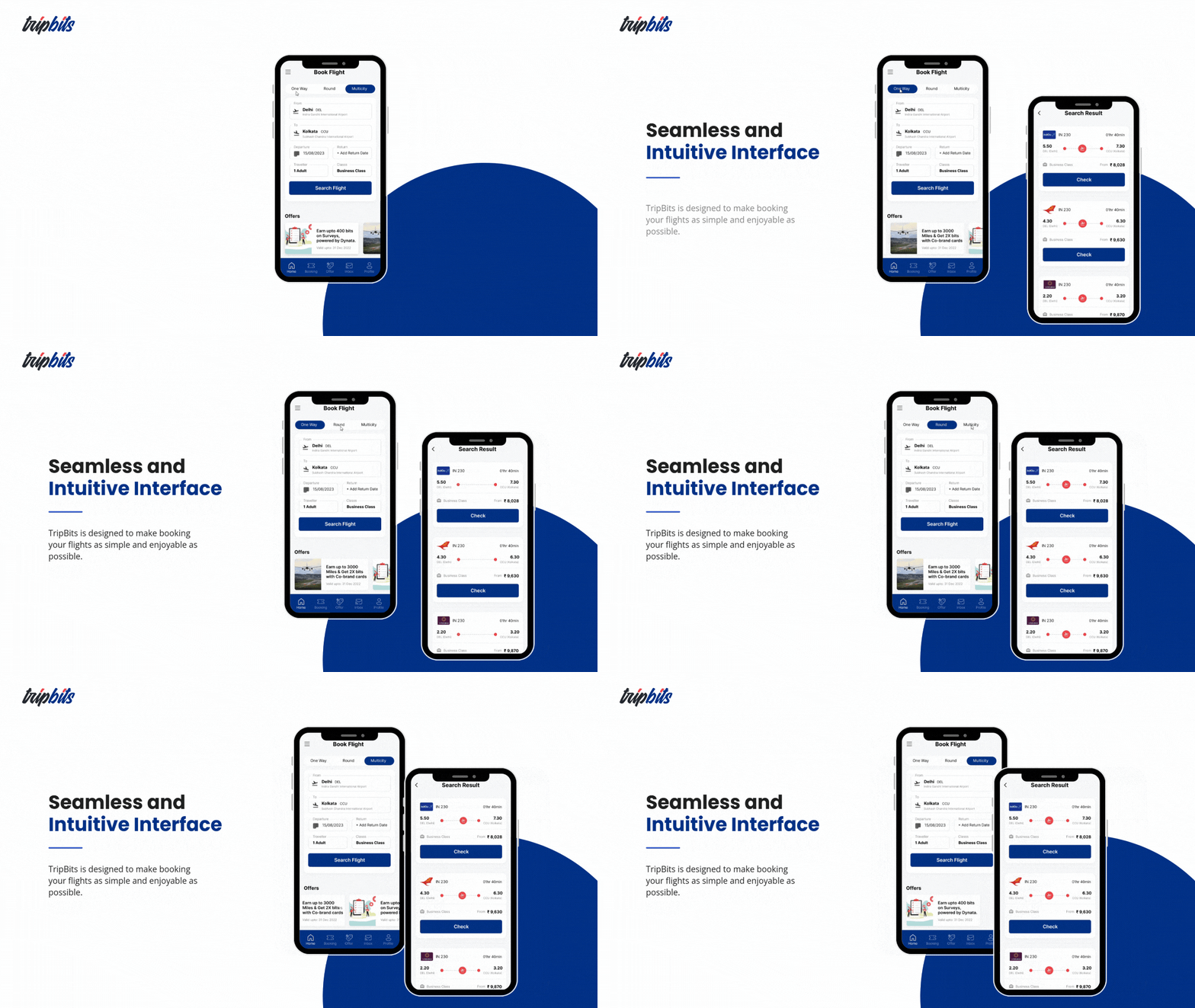
TripBits — Main View

TripBits — Mobile Travel Planning Interface

TripBits — Destination Discovery
TripBits — Smart Search
TripBits — Flight Results
TripBits — Seat Selection
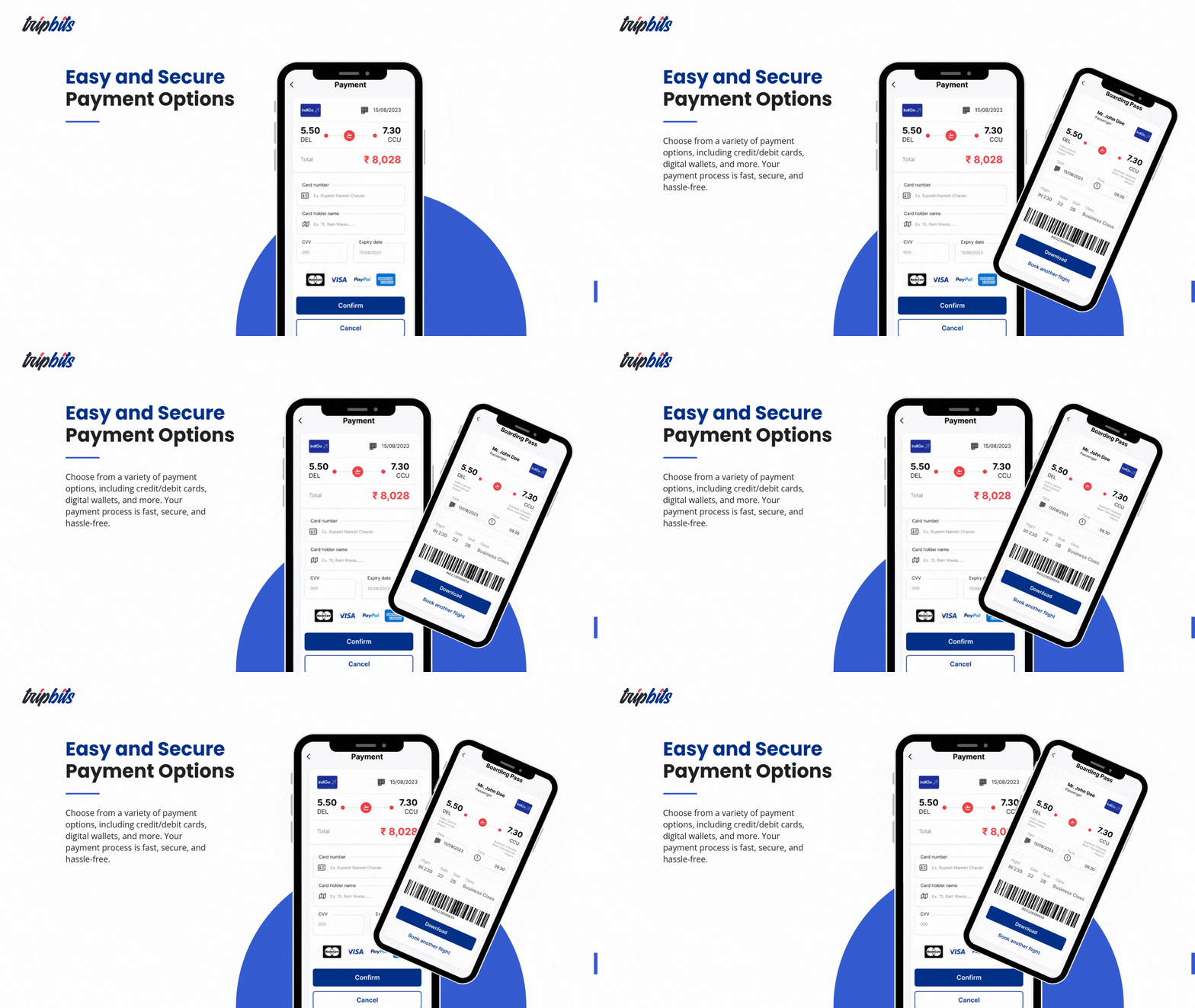
TripBits — Checkout Flow
TripBits — Price Summary
TripBits — Booking Confirmation

TripBits — Booking Confirmation & Rewards

Design Decisions

What Makes It Different

🗺️

Destination-First Discovery

Problem
63% of users had no specific destination in mind at session start. Search-first entry created dead ends for discovery behavior.
Approach
Immersive destination photography as the opening screen. Emotional inspiration precedes functional search.
User Benefit
Users arrive at search already emotionally committed to a destination — reducing decision paralysis at the results stage.
Business Benefit
2.4× higher booking completion for users who engaged with destination photography before searching.
🤖

Smart Search Intelligence

Problem
Traditional search returned 50+ options with no intelligent ranking. Decision paralysis replaced excitement.
Approach
AI-ranked results by value score (price + timing + flexibility), flexible date intelligence, and curated "best pick" surfacing at the top.
User Benefit
The right option is visible within the first three results. Users spend time deciding, not comparing.
Business Benefit
Reduced time-to-selection and lower mid-funnel drop-off. Faster path from search to booking confirmation.
💎

Transparent Pricing from Step One

Problem
67% of users abandoned at the payment step due to surprise fee reveals — the single largest conversion killer in the app.
Approach
All taxes, fees, and charges shown on every result card from the first search screen. Zero additional cost revealed at any later step.
User Benefit
No price shock at checkout. Users mentally commit to the all-in cost during search — checkout becomes confirmation, not discovery.
Business Benefit
40% increase in booking completion rate. Dramatically higher return rate from users who trusted the pricing model.
🏁

Milestone-Based Checkout

Problem
12-step checkout with no visible end created anxiety at every step. Users didn't know how close they were to done.
Approach
3 named milestones — Search, Select, Pay — with persistent progress indicator visible throughout. Each step is a meaningful moment, not a data collection task.
User Benefit
"I'm almost done" replaces "How much more is there?" Users feel in control and progress-aware at every step.
Business Benefit
55% reduction in mid-flow abandonment. Shorter time-to-confirmation per session.

Gamified TripBits Rewards

Problem
Post-booking confirmation was administrative — an itinerary dump with no emotional payoff. Users closed the app and didn't return.
Approach
TripBits points awarded immediately on confirmation with animated reveal. Loyalty progress visible from the first booking. Every completion is a celebration.
User Benefit
The confirmation screen becomes the best moment in the app — a reward for completing the journey, not a receipt.
Business Benefit
2× return booking rate. The rewards loop created a reason to come back before the trip even happened.

Motion as Emotion

Problem
Static state transitions felt clinical and cold — no sense of movement, progress, or anticipation in the experience.
Approach
Spring-curve micro-animations for every state transition. Search results load with a cascade. Steps complete with a burst. Confirmation triggers a full celebratory sequence.
User Benefit
Each interaction carries emotional weight. The app feels alive — like something about to depart, not a form being filled.
Business Benefit
92% "delightful" or "excellent" rating in usability testing — the motion system was cited as the primary differentiator by participants.

04 — Design System

Built for the
Journey Ahead

Color Palette

Amber gold anchors the brand — energetic, warm, aspirational. Sky blue provides cool relief and signals trust on pricing and confirmation states.

Type Scale

72px Display
36px Heading
16px Body Regular
11px LABEL CAPS

Motion & Components

Destination Card Price Chip Date Picker Booking Step Reward Badge Tab Bar

All transitions use cubic-bezier(0.16,1,0.3,1) for a spring-like feel that rewards every tap.

Spacing Scale

4pt base grid. Mobile-first components built for thumb reach — key actions sit in the bottom 40% of the screen.


05 — Impact

Numbers That Tell
the Story

Validated through usability testing, A/B prototyping, and post-launch analytics across a cohort of 500+ test users.

0%
Booking Completion

Increase in users completing the full checkout — from search to confirmed ticket.

0
Checkout Flow

Collapsed from a 12-step legacy experience into 3 milestone-based moments.

0%
User Satisfaction

In usability testing, 92% of participants rated the experience "delightful" or "excellent".

0
Return Booking Rate

Users returned to book again at twice the rate of the legacy app — powered by TripBits rewards.


Key Learnings

What this project taught me

TripBits was the clearest lesson I've had in how emotional design is not an aesthetic layer — it's structural. The way a screen feels determines whether the user continues or exits, far more than the information it contains.

01
Emotional state drives conversion more than information architecture
We obsess over information hierarchy — what goes where, what the user needs to know in what order. But in a transactional flow, the user's emotional state at each step matters more. A user who is anxious abandons. A user who is excited completes. Designing the emotional arc of the booking flow was the highest-leverage work on the project.
02
Transparency always wins retention, even when it costs conversion short-term
Showing all-in pricing on every result card reduced individual click-through rates on cheaper-looking options. Every stakeholder wanted to revert. But the checkout abandonment data was definitive — hidden fees were destroying the business. Transparent pricing had a short-term metric cost and a long-term retention gain. Defending that tradeoff required showing the full funnel picture, not just the top-of-funnel click rate.
03
Naming progress transforms anxiety into anticipation
The difference between "Step 7 of 12" and "You're at Pay — almost done" is not cosmetic. One triggers the arithmetic of how much is left. The other triggers the psychology of completion. Named milestones with visible progress changed the emotional arc of the checkout from a wall to be climbed to a finish line to be crossed — and the abandonment data reflected that shift immediately.
04
The confirmation screen is the most important screen in any transactional app
Most apps treat confirmation as a receipt — a data dump that closes the loop administratively. We treated it as the emotional peak of the entire journey: the moment the user stops being a customer and starts being a traveller. Investing heavily in that screen — the reward reveal, the animation, the celebratory tone — created the loyalty loop that drove 2× return bookings. The end of one transaction is the beginning of the next relationship.

Reflection

"The most important screen in TripBits isn't the search results or the payment page. It's the confirmation. We spent more time on the post-booking confirmation than on almost any other state — because that's the moment the user stops being a customer and starts being a traveller. Getting that transition right, making it feel celebratory rather than administrative, was the clearest articulation of what we were building."

— Rupesh Chavan, Lead Product Designer

Mobile App Travel UI Design UX Research Design Systems Interaction Design Figma Canva Adobe Illustrator