01 / 03
The Spreadsheet Trap
82% of finance teams still relied on manual spreadsheet reconciliation, causing 15+ hours per week of wasted effort — and introducing compounding errors into critical financial decisions.
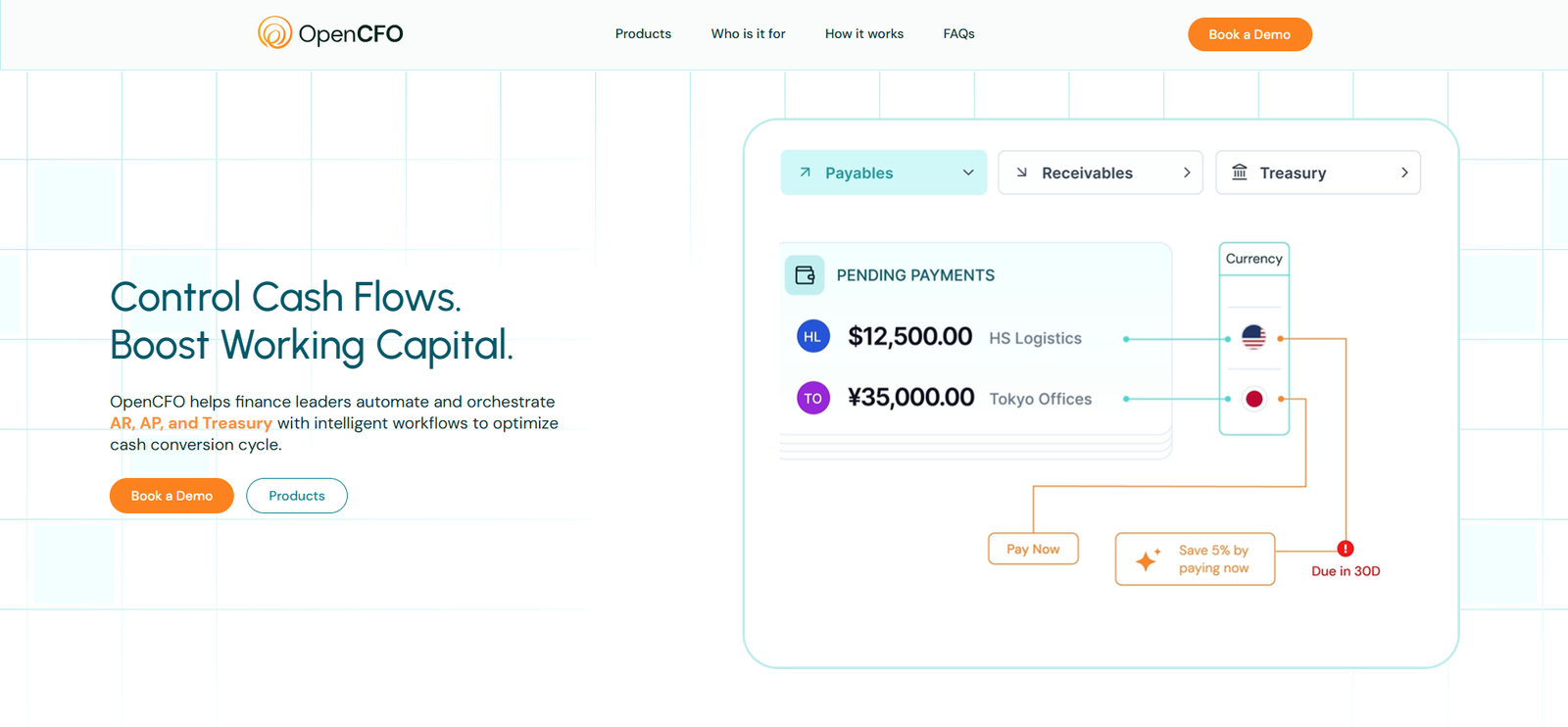
Designing OpenCFO — a real-time AI cash flow platform that transforms how finance teams see, predict, and act on money movement.
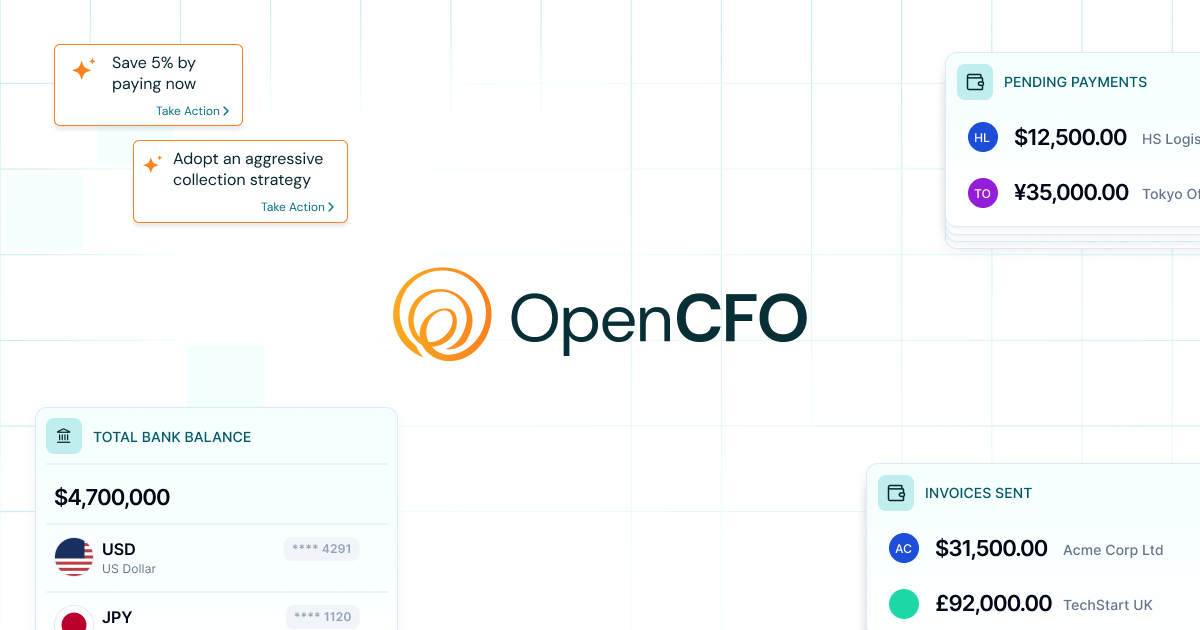
CFOs and finance teams at SMBs were drowning in spreadsheets, disconnected bank feeds, and reactive decision-making. Cash flow — the single most critical metric for business survival — was invisible until it was too late.
There was no intelligent, unified platform that gave real-time cash flow visibility with predictive insights — especially for SMBs who lacked the enterprise budgets for tools like Anaplan or Adaptive Insights.
OpenCFO's mission was clear: bring financial-grade intelligence to every CFO, regardless of company size. The design challenge was making AI-powered complexity feel effortless.
82% of finance teams still relied on manual spreadsheet reconciliation, causing 15+ hours per week of wasted effort — and introducing compounding errors into critical financial decisions.
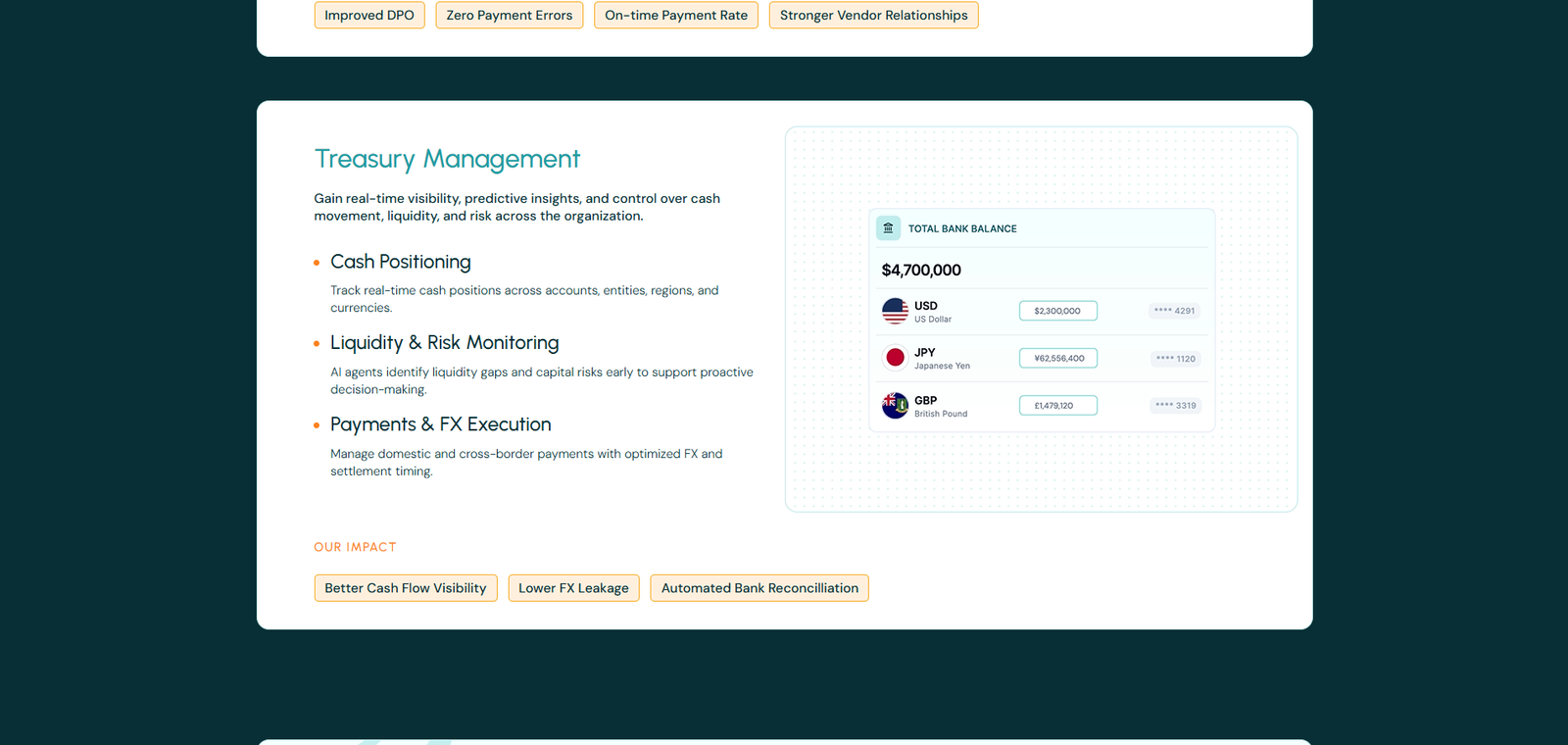
CFOs couldn't see their cash position across all accounts in real-time. Most strategic decisions were being made on week-old data — a dangerous lag in volatile market conditions.
Enterprise finance tools were prohibitively complex and expensive. SMB finance teams needed genuine analytical power without the steep learning curves or six-figure implementation costs.
05 — User Stories
06 — Competitor Analysis
| Feature | Mosaic | Cube | Causal | OpenCFO |
|---|---|---|---|---|
| Real-time Cash Flow | ~ | ✕ | ~ | ✓ |
| Scenario Modeling | ✓ | ✓ | ✓ | ✓ |
| ERP Integration | ✓ | ✓ | ~ | ✓ |
| Automated Reports | ✓ | ~ | ✓ | ✓ |
| Collaboration | ~ | ✓ | ✓ | ✓ |
| SMB-friendly Pricing | ✕ | ✕ | ~ | ✓ |
Solution Exploration
Financial dashboards routinely make the wrong tradeoffs — favouring completeness over clarity, schema over mental model. The three decisions below shaped how OpenCFO resolved those tensions.
These figures reflect the design targets established through CFO interviews and prototype testing — not post-launch production data. They represent the measurable outcomes the information architecture and interaction design were built to achieve.
Improvement in time to see full cash position across all accounts.
Average time from account connection to actionable cash flow insight.
All data visualisations include non-colour encoding (pattern, label, icon) — making the dashboard usable for colour-blind users, a non-negotiable for enterprise finance tools.
Reduction in hours spent on manual spreadsheet reconciliation work.
Key Learnings
"The hardest lesson from OpenCFO was understanding that information hierarchy in financial dashboards isn't a visual problem — it's a cognitive one. The data that needs to be prominent isn't the data that's most visually dramatic. It's the data that triggers the next decision. Designing around the CFO's actual mental model, not the database schema, was the shift that unlocked the whole project."
Rupesh Chavan — Lead Product Designer