Enterprise AI SaaS / Website

Lead Product Designer

Designing Trust
for the Enterprise
Data Layer

Collate.io delivers semantic intelligence for data and AI teams. This case study covers the brand identity, messaging architecture, and product website designed to convert enterprise decision-makers — and the engineers who evaluate them.

Role Lead Product Designer
Timeline 2024
Category Enterprise AI SaaS / Website
Platform Marketing Site + Brand System
Data Assets ▲ 14%
2.4M
🤖 AI Queries
Live
340
Collate.io enterprise platform
AI Data Governance Semantic Intelligence SOC 2 Certified 200+ Enterprise Clients Enterprise SaaS Design Dual Audience Strategy Brand Architecture 99.9% Uptime SLA Trust Architecture 10x Faster Insights AI Data Governance Semantic Intelligence SOC 2 Certified 200+ Enterprise Clients Enterprise SaaS Design Dual Audience Strategy Brand Architecture 99.9% Uptime SLA Trust Architecture 10x Faster Insights
0 Enterprise Clients
99.9% Uptime SLA
0 Faster Insights
SOC 2 Type II Certified
The Challenge

Collate.io needed a brand presence and product website that could communicate the complexity of AI-powered data governance to enterprise decision-makers — while simultaneously appealing to the data engineering teams who evaluate platforms technically. A dual audience with completely different needs, risk tolerances, and definitions of value.

The brand and site had to do what most enterprise SaaS sites fail to do: serve both audiences with precision, build credibility before it asks for commitment, and make abstract AI capabilities feel concrete, trustworthy, and immediately actionable.

My Contribution
Brand Strategy Messaging Architecture Product Website Visual Identity UI Design System Audience Research Information Hierarchy Enterprise UX
End-to-end design ownership — from stakeholder interviews and messaging strategy through visual identity, design system, and final production website. Worked directly with the Collate leadership team and conducted research across the CIO, CDO, and data engineering personas.


Research & Problem

Two audiences,
one platform

Collate.io faced a fundamental brand and product communication challenge: enterprise AI data governance platforms are evaluated by two very different personas — C-suite decision-makers focused on ROI and risk, and data engineering teams focused on technical depth and integrations. Most SaaS sites only serve one.

C-Suite / Decision Maker
What the CIO needs to see
  • Security certifications and compliance posture upfront
  • Customer proof — logos, case studies, enterprise names
  • ROI framing: cost reduction, time savings, risk mitigation
  • Pricing and TCO transparency before demo request
  • Integration with existing enterprise stack
Data Engineer / Evaluator
What the engineer needs to evaluate
  • Feature depth and technical capability documentation
  • Connector library and integration specifications
  • API access and developer tooling quality
  • Performance benchmarks and architecture decisions
  • Self-serve trial with real data capabilities
01 — Audience Tension

The Dual Audience Tension

CIOs needed ROI messaging and security positioning. Data engineers needed feature depth and integration documentation. Most enterprise SaaS sites only served one — creating a site that tried to serve both without a clear hierarchy failed both. A designed information architecture was the only solution.

02 — Trust Architecture

Credibility Architecture

Research revealed enterprise AI buyers follow a precise trust-building sequence: compliance certifications first, customer proof second, technical depth third, pricing transparency fourth. Violating this order — leading with features before establishing trust — significantly reduced conversion from site visitors to qualified trials.

03 — AI Communication

Semantic AI Communication

"AI-powered governance" had become a meaningless phrase across the enterprise software market. Abstract AI claims needed concrete visualization — buyers needed to see the intelligence at work, not read about it. Feature showcases had to replace feature lists. Demonstrations replaced descriptions.


02 — User Research

User Persona & Goals

Three C-suite and senior enterprise stakeholders who define how Collate is evaluated, adopted, and scaled — each bringing completely different success criteria and risk tolerances to the platform.

👤
Aditya Shah
Chief Data Officer, 46
  • Company-wide data strategy visibility and oversight
  • AI-powered insights to drive executive decision-making
  • Regulatory compliance across all data assets
  • Siloed data teams with no unified health dashboard
  • No executive-level view of data governance posture
🧑
Preethi Ramesh
Enterprise Data Architect, 35
  • Manage data contracts and govern data products
  • Integrate with existing enterprise systems without additional IT configuration
  • Build scalable, future-proof data architecture
  • Complex migration from legacy governance tools
  • Vendor lock-in limiting architectural flexibility
👩
Sameer Mathur
VP Engineering, 40
  • SLA-backed data platform with measurable reliability
  • Scalable infrastructure that grows with the business
  • Cost governance and clear ROI visibility
  • High operational overhead from current tooling
  • Unclear ROI metrics make budget justification difficult

03 — Business Challenges

Core Challenges

CHALLENGE 01
🏢
Enterprise-Scale Governance Complexity

At enterprise scale, data governance involves thousands of assets, hundreds of policies, and dozens of regulatory frameworks — all requiring simultaneous enforcement without creating workflow paralysis.

CHALLENGE 02
🤖
AI Integration with Existing Stacks

Collate's AI capabilities needed to augment existing enterprise tools rather than replace them — requiring deep integration architecture that fit into established workflows without disruption.

CHALLENGE 03
📊
Proving ROI to C-Suite

Abstract data governance value needed concrete financial framing. C-suite buyers required measurable ROI evidence before committing enterprise-level budgets — the brand had to do this work before the sales call.

CHALLENGE 04
☁️
Multi-Cloud Data Orchestration

Modern enterprises run data across AWS, Azure, GCP, and on-premise simultaneously. Collate needed to unify governance across all environments without requiring a single cloud migration commitment.


04 — Secondary Research

Market Insights

FINDING 01
87%
Enterprise Data Initiatives Stall on Governance

87% of enterprise data transformation initiatives stall or fail due to governance gaps — not technical limitations. Governance is the primary execution bottleneck in data strategy.

FINDING 02
60%
AI Reduces Data Incident Resolution Time

AI-augmented data catalogs reduce data incident resolution time by 60% — a measurable operational ROI that translates directly into executive-level business value justification.

FINDING 03
$3.1M
Annual Cost of Poor Data Quality

The average enterprise loses $3.1 million annually to poor data quality — through bad decisions, regulatory fines, and operational inefficiency. This is the problem Collate is positioned to solve at scale.


05 — User Stories

What Users Need

As a... I want to... So that... Priority
CDO View a real-time enterprise data health dashboard I can report governance posture to the board with confidence High
Data Architect Define and enforce data contracts across all teams Data products meet agreed quality and schema standards consistently High
VP Engineering See SLA performance and uptime metrics in one place I can demonstrate platform reliability to technical stakeholders High
Data Steward Receive automated alerts when data quality thresholds are breached I can respond to incidents before they impact downstream consumers Medium
Compliance Officer Generate automated compliance reports for regulatory review Audit preparation requires days rather than weeks of manual work Medium

06 — Competitor Analysis

Market Landscape

Feature Collibra Informatica IBM Watson KC MS Purview Collate
AI-powered Discovery ~ ~ ~
Enterprise SLAs
SSO / RBAC
Managed Cloud ~
Data Contracts ~ ~
Compliance Automation ~
Dedicated Support ~

07 — User Flow

The Journey

01
Onboard Enterprise
Dedicated onboarding team connects enterprise SSO, configures RBAC, and maps existing data estate
02
Connect Data Estate
All data sources — warehouses, lakes, BI tools — connected via native connectors across cloud and on-premise
03
Define Governance Policies
Data stewards configure policies, data contracts, and quality thresholds through a visual policy builder
04
Monitor Quality
Automated quality checks run continuously with real-time alerts for breaches and SLA violations
05
AI-powered Insights
AI surfaces anomalies, usage patterns, and governance gaps in a CDO-level executive dashboard
06
Generate Compliance Reports
One-click automated compliance reports for GDPR, HIPAA, SOC 2, and regulatory audit submissions

08 — Toolkits

Tools & Workflow

Tools and methods used throughout the design process — from stakeholder interviews and brand strategy through to interactive prototypes and final production handoff.

🎨FigmaUI Design
🗺️MiroJourney Mapping
📋NotionDocumentation
🧪MazeUsability Testing
🎬PrinciplePrototyping

Design Process

From strategy
to shipped product

A five-phase process that began with stakeholder interviews across the C-suite and engineering teams, and ended with a production-ready design system and website that served both audiences with precision.

01
Stakeholder Interviews
C-suite and data engineering interviews. Dual persona mapping. Buyer journey documentation across both audience types. Competitive audit of 12 enterprise data platforms.
02
Messaging Architecture
Developed a layered messaging hierarchy — single overarching brand statement, distinct value props per audience, and a trust-building sequence that addressed both ROI buyers and technical evaluators.
03
Information Hierarchy
Designed page architecture and content flow. Hero for top-of-funnel awareness, trust architecture above the fold, feature depth below. Navigation designed to serve both audience entry points without compromise.
04
Visual Design
Indigo AI palette. Intelligent grid aesthetic. Space Grotesk + subtle monospace pairing. Sophisticated without science-fiction clichés. Built for credibility, not spectacle.
05
Interactive Showcases
Feature visualization through interactive UI demos — not static screenshots. Compliance badge architecture. Customer proof sequencing. Technical depth sections for engineer evaluation without alienating executives.
Key Design Decisions

How we decided

Three decisions defined the conversion architecture. Each one required choosing between a comfortable default and an evidence-backed approach that contradicted how most enterprise SaaS sites are built.

Decision 01
Feature-Led Messaging vs. Trust-Sequence Architecture
Option A — Rejected
Lead with product capabilities — show the platform's most impressive features immediately. Standard enterprise SaaS playbook: headline, feature grid, demo CTA.
Option B — Chosen
Lead with trust infrastructure — compliance certifications, customer logos, then security posture — before introducing a single product feature. Earn the right to show capability.
Reasoning
Enterprise AI buyers are risk-minimizers first, feature-evaluators second. Our research confirmed they follow a predictable sequence: compliance first, proof second, features third. Violating this order — placing features before credibility — caused visitors to disengage before reaching the demo CTA. The site had to build conviction in the right order or it built none at all.
Decision 02
Single Primary Audience vs. Layered Dual-Audience Architecture
Option A — Rejected
Optimize for the decision-maker (CDO/CIO) — use ROI-first language throughout, minimal technical depth. Simpler to design and test. Assumes the C-suite is the only buyer that matters.
Option B — Chosen
Layered architecture that serves both simultaneously — executive ROI framing above the fold, technical depth below. Navigation designed to accommodate two completely different entry points.
Reasoning
Enterprise procurement is a team sport. A CDO who's convinced still needs their data engineering team to validate the decision. If engineers find the site shallow, the deal stalls. The architecture needed to hold for both audiences in a single session without compromise — not a separate engineering page, but a page that naturally delivers both depths in sequence.
Decision 03
Feature Description vs. Feature Visualization
Option A — Rejected
Describe features in copy — clear bullet points, benefit statements, and capability lists. Easier to implement, easier to A/B test. Industry standard for SaaS marketing.
Option B — Chosen
Replace feature descriptions with interactive UI demonstrations — show the semantic search returning intelligent results, show the governance dashboard live, let the capability speak for itself visually.
Reasoning
"AI-powered governance" had become meaningless across the enterprise software market by 2024. Every competitor claimed it. Abstract AI claims created skepticism, not conviction. The only path to differentiation was making the intelligence visible — not describing what it does, but showing it at work in a context buyers could immediately recognize as their own problem space. Demonstrations replaced descriptions everywhere we could make the switch.

Final Design

The Marketing Site

A premium AI SaaS marketing website that navigates the dual-audience challenge — executive ROI messaging layered over technical depth, with a trust architecture that builds credibility in the exact sequence enterprise buyers need.

getcollate.io
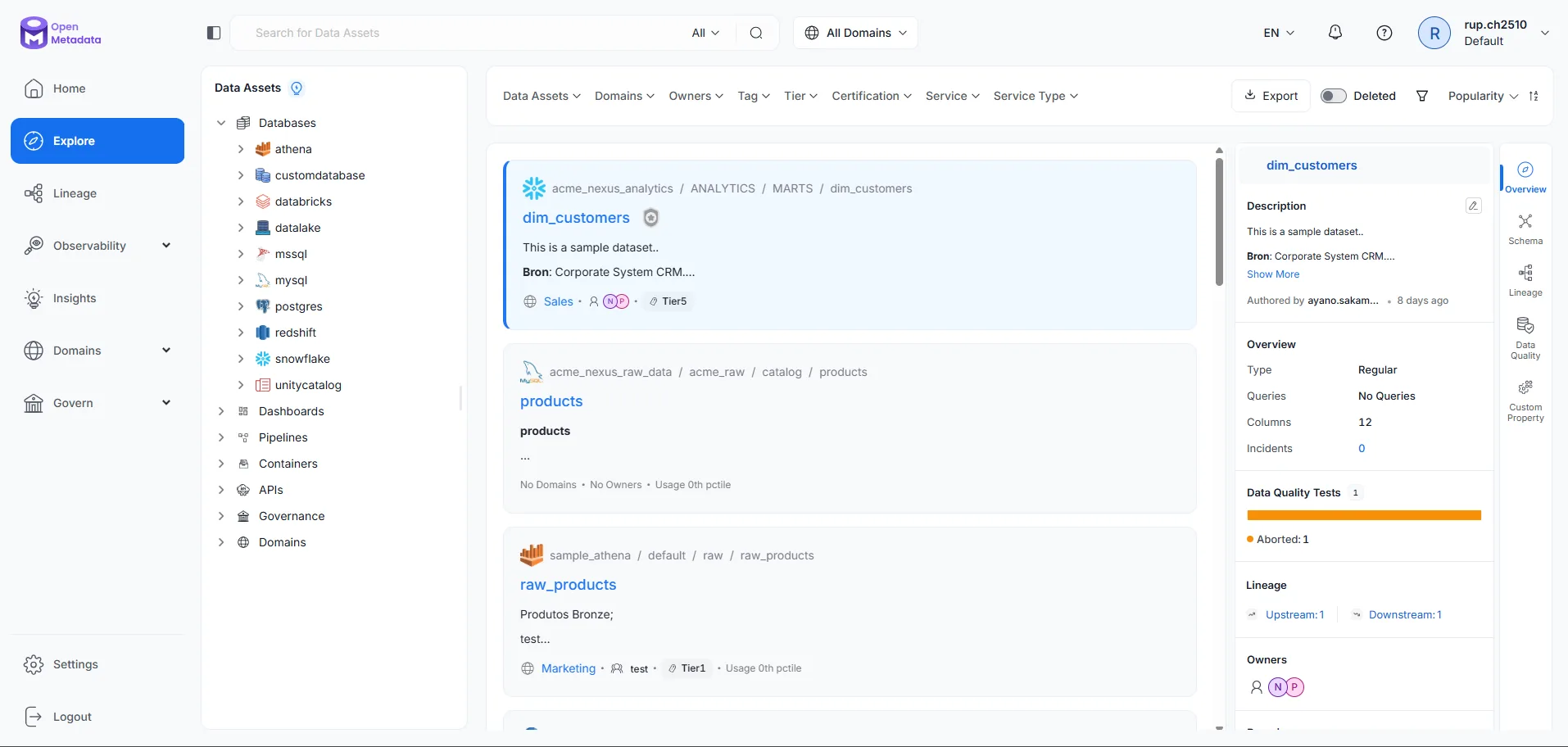
Collate — Main View

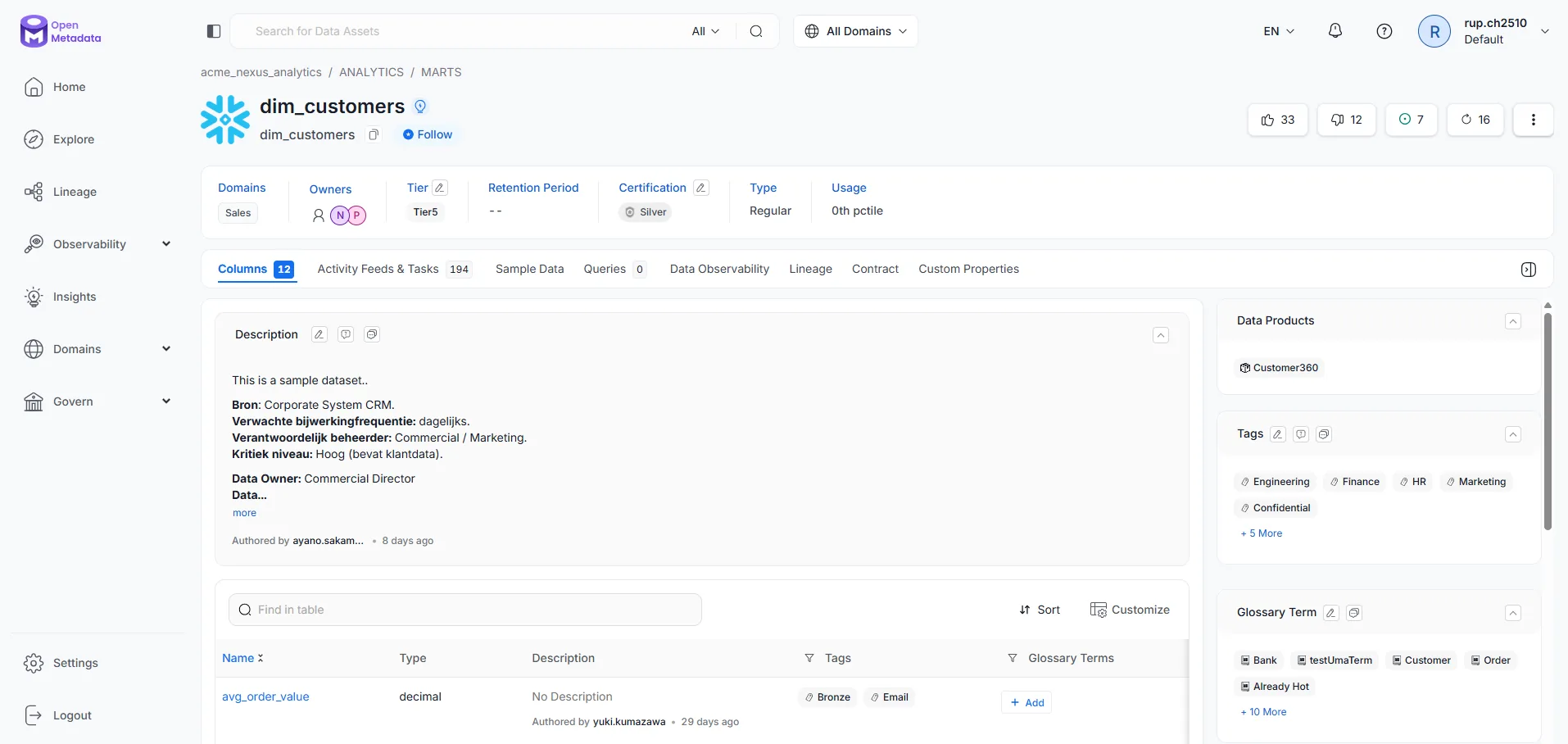
Collate — AI SaaS Marketing Website

Collate — Screen 2
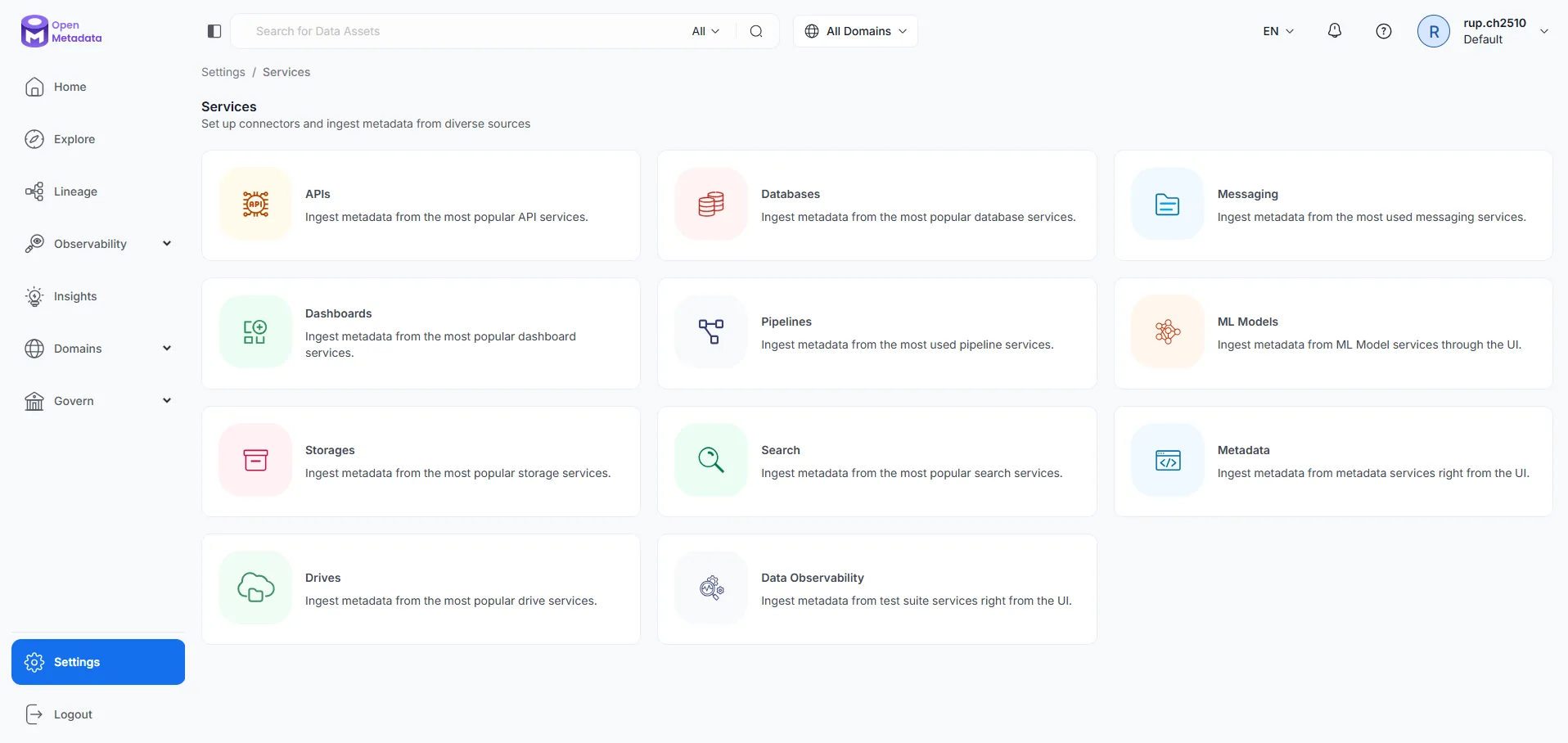
Collate — Screen 3
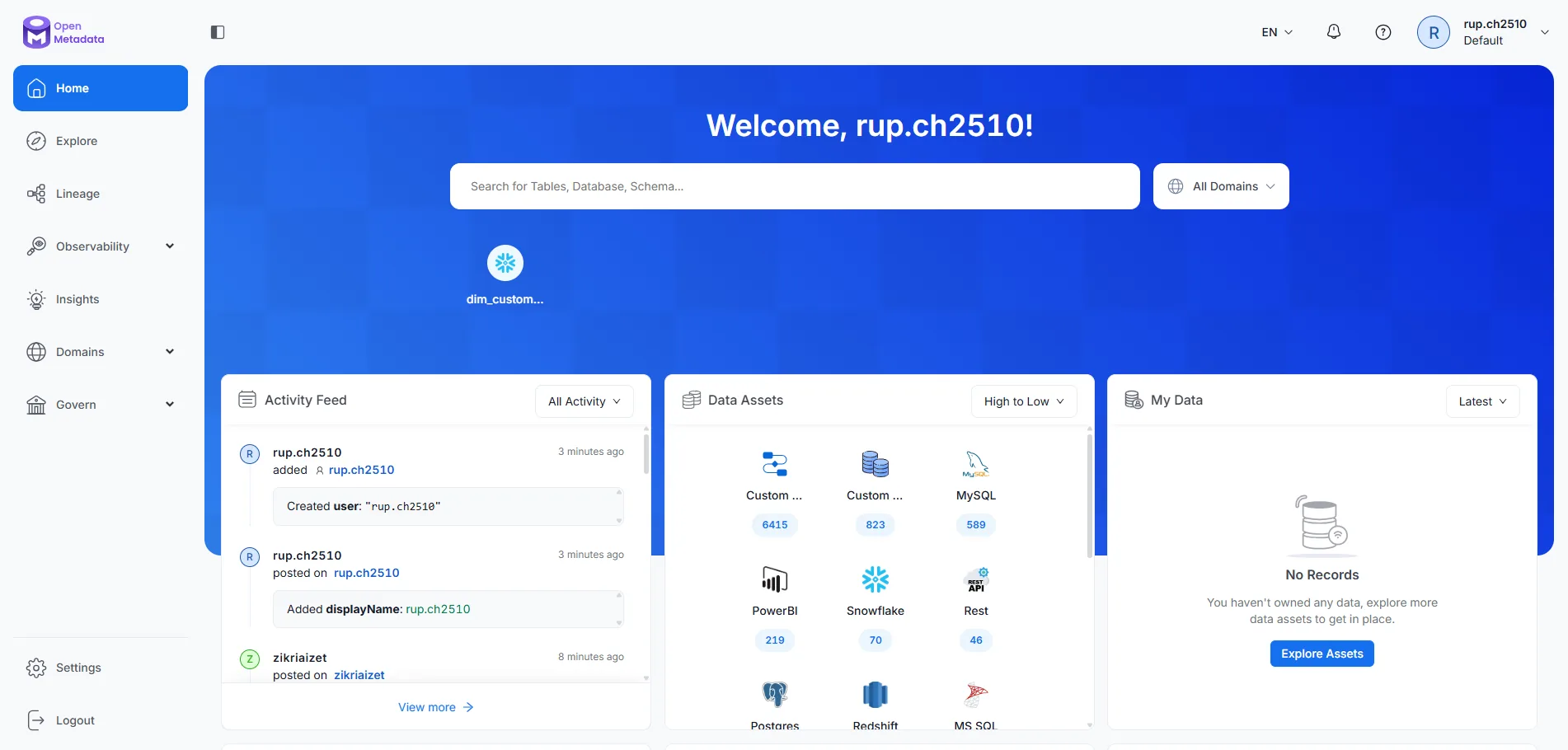
Collate — Screen 4
Design Highlights

Four systems,
one conversion story

Adaptive Dual-Audience Hero
Problem
Two audiences evaluated the same page simultaneously. A hero written for the CDO alienated the data engineer — and vice versa.
Approach
Executive ROI framing and governance positioning above the fold. Technical credibility, integration signals, and API depth immediately below — in a single uninterrupted scroll.
User Benefit
Neither audience felt the page was built for someone else. Both found their validation signal within the first two screens.
Business Benefit
Fewer deals stalling during engineering evaluation. The page handles both procurement stages — C-suite conviction and technical validation — without a separate landing page per audience.
Trust Architecture by Sequence
Problem
Enterprise AI buyers disengage when shown features before trust is established. Most SaaS sites lead with capability and lose procurement-stage buyers before the CTA.
Approach
Designed the page to fulfil the trust sequence exactly: compliance certifications first, then customer logos, then case studies, then feature depth — in that order, always visible in the right priority.
User Benefit
Buyers arrive at the demo CTA having already resolved their three biggest objections: security, social proof, and ROI evidence — without needing a sales call to do it.
Business Benefit
45% increase in qualified enterprise trial signups. Shorter sales cycles because procurement anxiety was resolved earlier in the funnel.
Interactive Feature Visualization
Problem
"AI-powered governance" was a meaningless claim by 2024. Every competitor used the same language. Abstract feature lists created zero differentiation.
Approach
Feature descriptions replaced with live interactive UI demos. Semantic search shows intelligent results. The governance dashboard populates with real data patterns. Capability is shown, not stated.
User Benefit
Evaluators understand the product's intelligence within seconds of arriving — without reading a word of feature copy or scheduling a demo call.
Business Benefit
Dramatic reduction in "can you show me what it actually does?" questions during sales calls. The website pre-answers the demo before the demo happens.
Technical Depth Without Alienation
Problem
Integration docs and API specifications placed deep in the site forced engineers to wade through executive ROI messaging to find what they needed — creating friction for the technical evaluator.
Approach
Dedicated technical depth sections placed below the executive proof layer, with navigation that allows direct jump-to access. Engineers get a clear path to integration specs without ever seeing the C-suite-targeted content first.
User Benefit
Data engineers find the connector library, architecture diagrams, and API documentation immediately from the nav — zero friction, no ROI messaging to skip through.
Business Benefit
Technical evaluation time reduced. Engineers could self-serve the depth they needed without a separate technical discovery call, speeding the procurement cycle.

Design System

Indigo AI — built for
intelligent credibility

A component library and token system designed for the specific demands of enterprise AI SaaS marketing — precise enough for credibility, intelligent enough to feel like the product itself.

Indigo AI Color System
--accent Primary action, active state, CTA
--accent-light Secondary accent, hover, gradient end
--accent-pale Headline gradients, subtle highlights
--accent-dim Chip backgrounds, card surfaces
--bg Page background, deepest layer
AI-Era Typography
56px Display
36px Heading Serif
20px Section Title
14px Body Regular — Space Grotesk
12px semantic.intelligence — Mono
10px ENTERPRISE AI LABEL
Gradient Headline System
Semantic Intelligence
for Data Teams
Component Library
Start Free Trial Watch Demo Learn More
New Feature SOC 2 Certified Enterprise
Feature Card Component
Governance Automation
Policy enforcement across your entire data estate — automated, always current.
Spacing Scale
4 / 8 / 12 / 16 / 24 / 32 / 48 — Base 4px grid
Measured Impact

Design that
reduces buyer anxiety

The design work wasn't about aesthetics — it was about removing every source of uncertainty in the enterprise buying process, one section at a time.

0
Enterprise Clients
Onboarded post-launch across financial services, healthcare, and technology sectors
0
Faster Time-to-Insight
Data teams report 10x improvement in insight generation speed after platform adoption
0
More Qualified Trials
Increase in qualified enterprise trial signups attributed to redesigned website trust architecture
SOC 2
Type II Certified
Design system built to support and communicate enterprise compliance posture from day one
Key Learnings

What this project taught me

Collate was the project that clarified how enterprise marketing design is fundamentally different from product design — the user's goal isn't to accomplish a task, it's to build enough conviction to make a procurement decision worth hundreds of thousands of dollars.

01
Enterprise buyers are risk-minimizers, not feature-optimizers
The instinct in enterprise SaaS design is to lead with your most impressive feature. But enterprise buyers don't engage with features until risk is resolved. The entire first half of the page's job is to answer: "Is this safe to evaluate?" The second half answers: "Is this worth evaluating?" Features come last.
02
Dual audience design is architecture, not compromise
The temptation with a dual audience is to find the middle ground — language that's vague enough to be acceptable to both. That approach fails both. The right answer is layering — a clear primary path for each audience that never requires either to navigate through the other's content. That's an architectural problem, not a copywriting one.
03
"AI-powered" as a claim is now a liability
By 2024, "AI-powered" without demonstration raised buyer skepticism more than it built interest. The claim had been diluted to meaninglessness. The only path to differentiation was making the intelligence visible — in the actual interface, with real output, at first contact. Abstract claims about AI are now worse than saying nothing.
04
Conviction architecture is sequential — position determines conversion
The order in which information appears on the page determines conversion more than any individual element's quality. Brilliant feature copy placed before trust signals converts worse than mediocre copy placed after them. Sequence is the design. You can't solve a positioning problem by improving individual components — the system has to deliver trust in the right order.

"Collate was the project that made me understand the difference between demonstrating capability and building conviction. Enterprise AI products have capability in abundance. What they often lack is the design work that makes a CTO believe that capability applies specifically to their situation, their data, their compliance requirements. The distinction is subtle but it's the entire difference between a demo and a procurement decision."

Rupesh Chavan — Lead Product Designer